For most of my life, our family slides existed in two ways. Either they were projected onto a lounge-room wall at a family "slide night", or they were held up, one at a time, to the nearest window. Both methods had their charm. Neither did the images justice. And neither felt satisfactory.
This, for me, was wholly unfortunate. In fact it’s nagged at me for decades. In fact, I would even say, it has haunted my own photography. I’ve spent decades looking at slides and marvelling at their colour rendition, at how they handled blues, at their vibrancy. I’ve wanted to (and have tried, endlessly) to mimic this “slide” feel. But what I’ve been mimicking from has been so very hard to see clearly.
This has bugged me like you wouldn’t believe.
It’s bugged me as a photographer. And it’s bugged me as a human being. I haven’t been able to see my family history properly.
Or it haven’t, until this year, when I discovered a device called a Valoi easy35, and used it in combination with a high resolution modern camera. With this combination I sat down and scanned the lot – roughly 100 family slides, from the 1960s and 70s. I’m not talking here about scans with your phone or (with) whatever half-arsed tech that can be used. I’m talking about taking the actual slides, encasing them in a back-illuminated device (the Valoi), and then using a macro lens and a 40MP camera to effectively take a pristine re-capture of the slide.
It’s a pretty basic method and indeed device. But even so, we are entering a whole new world here.
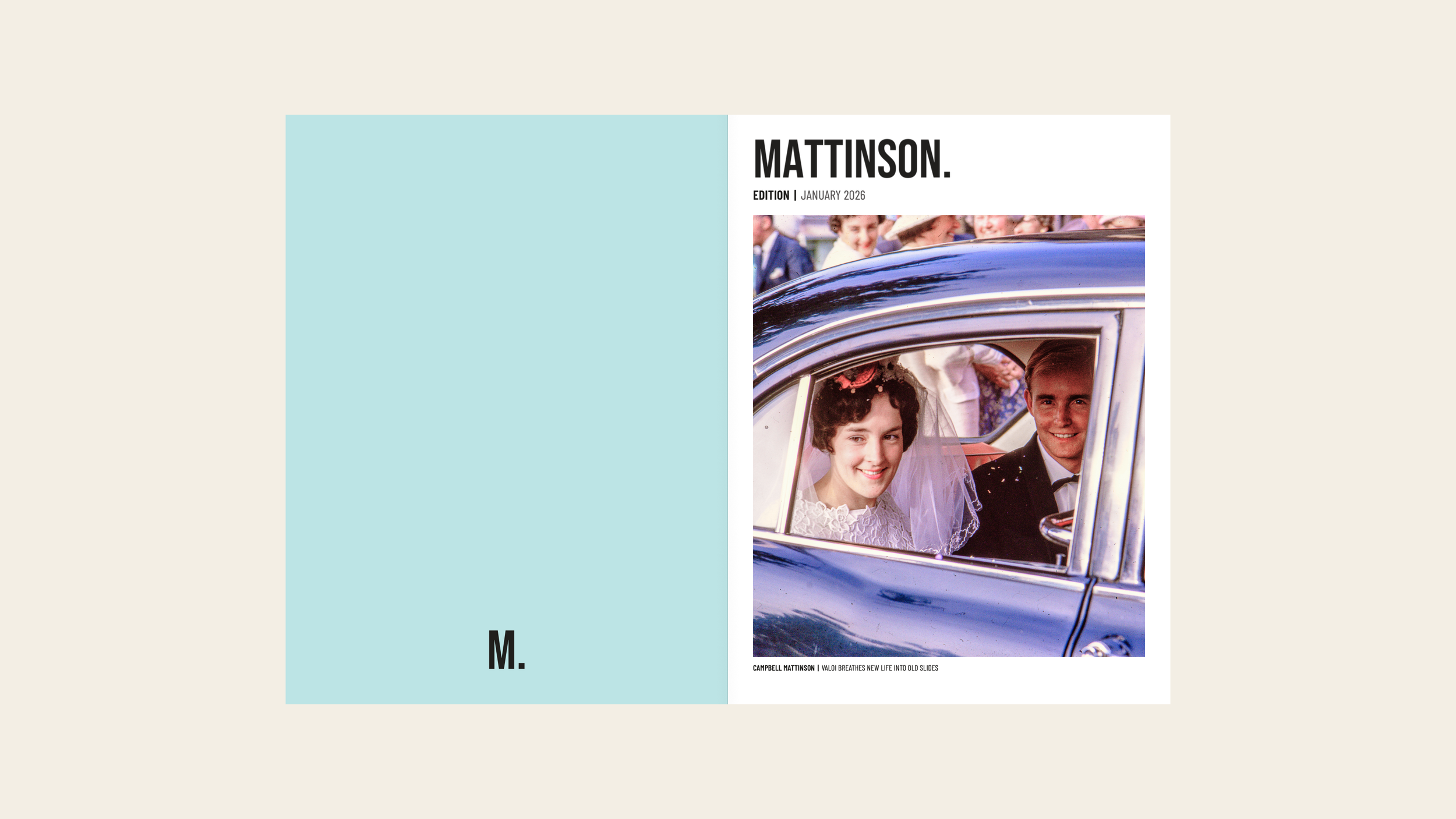
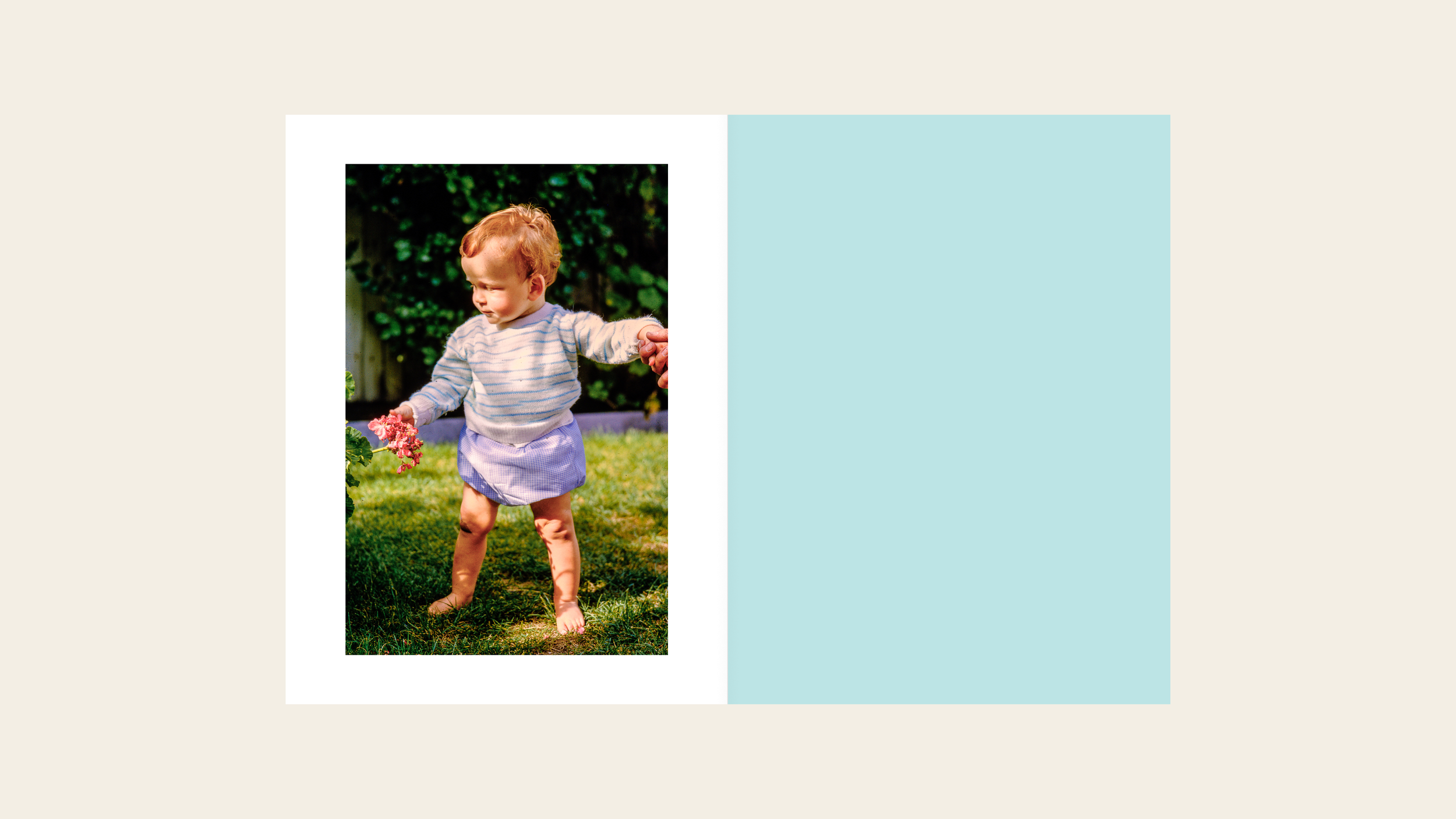
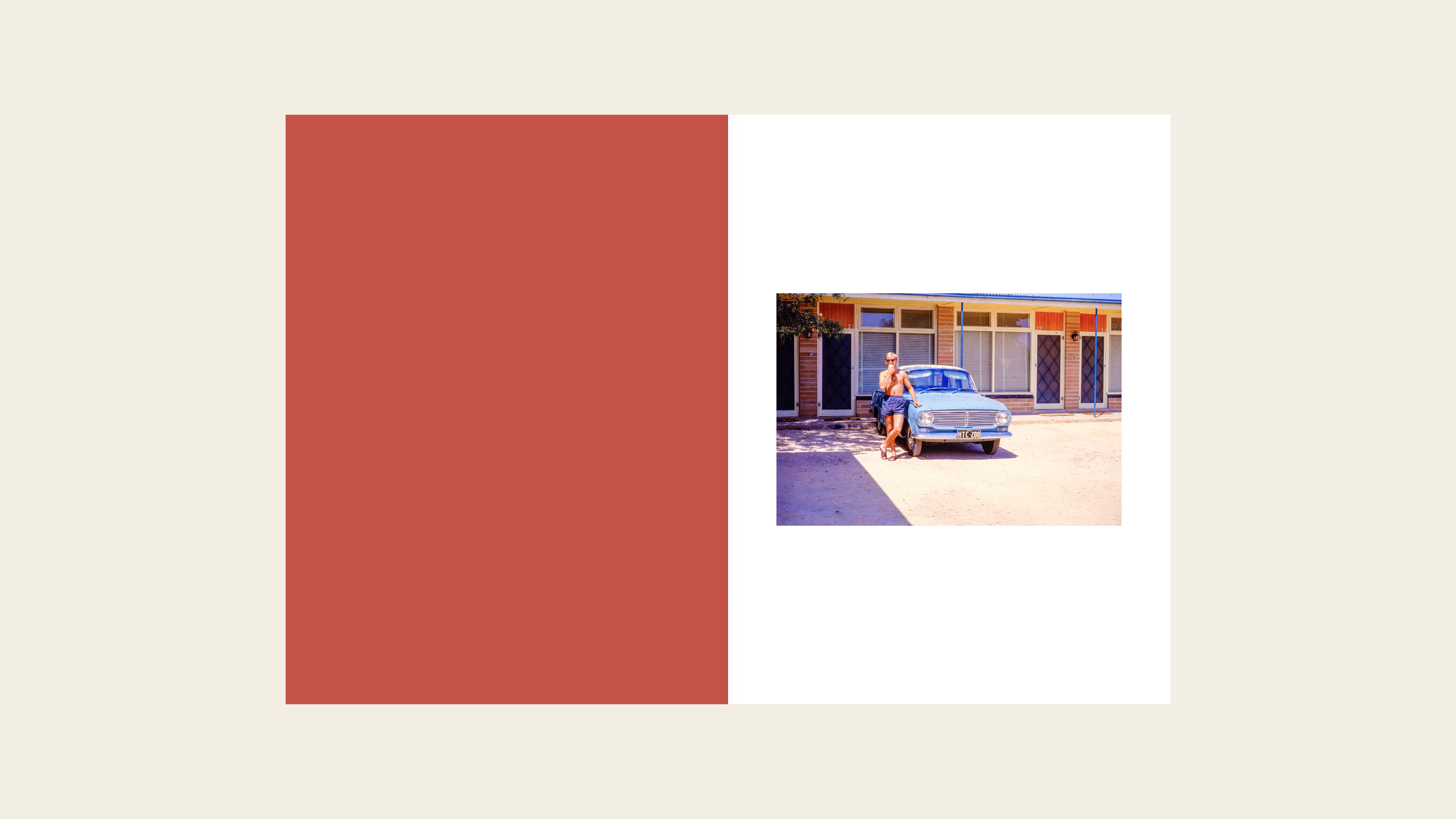
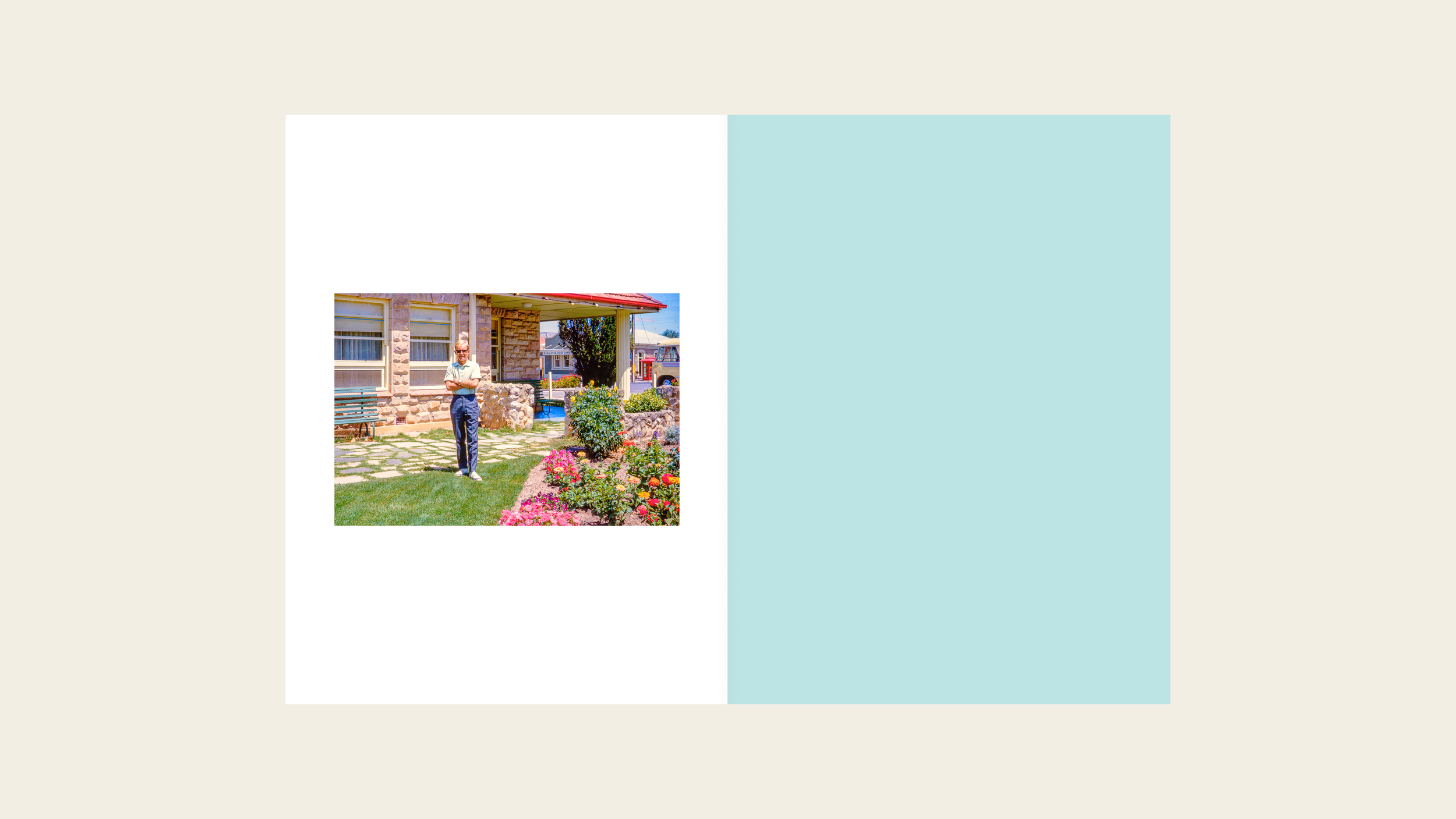
The results were so good, and so compelling, that I printed a photobook, 30cm x 30cm, to high spec, with my resultant files. In fact I printed two separate versions – with different layouts – so that I had a copy both in my office and at home. I now have these beloved old pictures of family moments on paper, vivid as hell, gloriously tactile, with me, on my desk, every day.
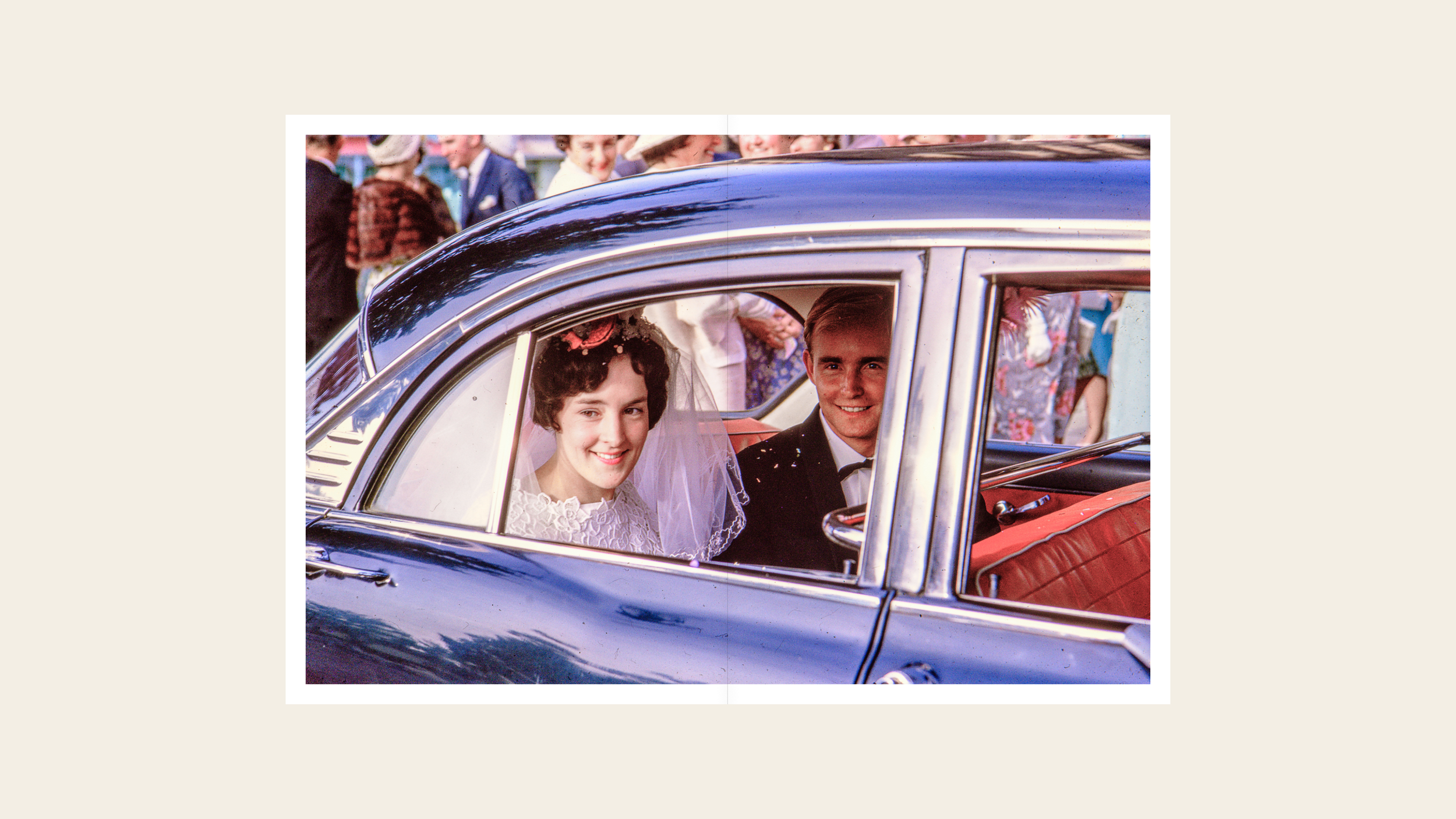
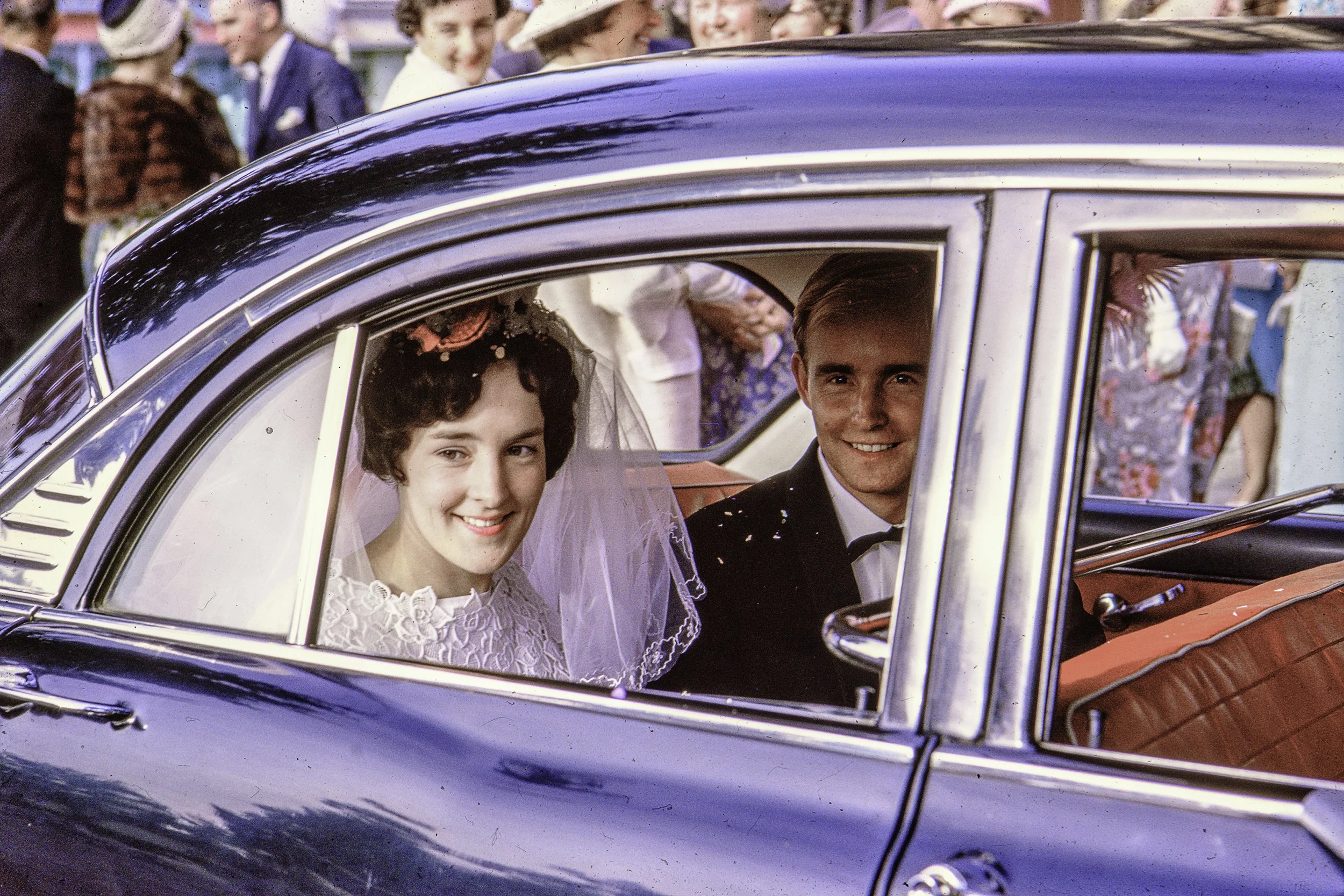
Among the slides were images from my parents' wedding, which took place in the early 1960s. My parents never had a wedding book. They do now – see an example image at the top of this page.
My parents also now have the full book of re-claimed images – of the early years of their marriage and of the family life they built thereafter. I don’t have a 100% accurate figure but, roughly, I think that they’ve looked at this book five million times in the six months since I had it printed. Or maybe six million times.
It's not overstating it to say that the book has put these slides into a completely new light. I'd only ever glimpsed these images – fleetingly, at the mercy of a projector bulb or a windowpane. They now sit on paper, sequenced, printed large, able to be handed around and laughed at, marvelled at, adored. These images were never, for practical reasons, given the respect they deserved. Sixty-odd years on, they have been. The tool at the centre of it all was the Valoi easy35.
What the easy35 is
The easy35 comes from Valoi, a small Finnish company. It was launched via Kickstarter in early 2023. It's not a scanner in the traditional sense. It's a camera-scanning system: a compact run of tubes, a film holder and a built-in light source, the whole thing screwing directly onto the front of a macro lens. You photograph the film; the device holds everything aligned, light-tight and evenly lit. There's no copy stand, no tripod, no darkened room, no separate light panel – the usual paraphernalia of camera scanning is done away with. The unit is about the size of a water bottle.
The kit ships with thread adapters and distance tubes so it can be configured to suit different sensors and focal lengths. Valoi makes holders for 35mm strips, sprocket-exposed 35mm, half-frame, 110, 126, APS and more – and, crucially for this project, a slide holder, which takes mounted slides fed through one at a time.
That is: the Valoi easy35 enables you to scan slides. But it also enables you to scan negatives.
Negatives though, once photographed, need to be inverted and converted in software. Slides don't. With slides, you're photographing a positive, so RAW processing alone is sufficient. Of all the formats the easy35 handles, mounted slides are arguably the one it flatters most, workflow-wise. But there’s also no doubt that with some simple software you can make glorious images with your old negatives as well.
My setup
I used the original Valoi easy35 – the v1 – with a 7Artisans 60mm f/2.8 macro lens on a Fujifilm X-T3. The x-T3 is a 26MP camera, and these images turned out excellent. I then re-scanned the slides with a Fujifilm X-E5 camera (which you don’t need to do; that was just me being luxurious). The X-E5 is a 40MP camera.
All you have to do is insert a slide, focus, click the shutter button, and repeat. There’s a bit of setting up but really, not a lot. And once you’re set up you just move methodically through; it’s easy.
The thing is: every new frame is captured under identical conditions. When frames are destined to sit beside one another on the pages of a book, for instance, that consistency matters enormously.
I then took all these images into Adobe Lightroom, and eventually into Photoshop. But both of these steps were for print-preparation (and logistical) reasons; I wasn’t altering the images (other than sharpening etc).
The results
The files were high quality and high resolution – the X-T3's 26-megapixel sensor comfortably outresolves what most consumer scanners will pull from a 35mm frame (in fact, it’s much higher resolution that most what most commercial labs provide; the X-E5 scans take this to eleven).
The end product was the book itself: 30cm x 30cm, printed to a high standard.
The cost
None of this was inexpensive. The camera body, the macro lens, the easy35 itself, and then the print cost – it adds up. The easy35 sits around the US$250 mark (AU$333 + accessories + delivery), which is modest next to dedicated film scanners, but the honest accounting includes the camera and a true macro lens if you don't already own them. For me, with the camera gear already in hand, the sums were better. AU$333+ for a bit of plastic did seem like a lot but then, the joy at the end of it all – the book, the images seen properly for the first time in decades – made it 100% worth it. If I had my time again, I’d stump up again, no hesitation.
A note on versions
Valoi released an easy35 v2 (version 2) in early 2026 – a full redesign, moving from the v1's 3D-printed nylon body to injection-moulded ABS, with an all-metal rotation mechanism, magnetic accessory mounting and a claimed jump in light uniformity from 81% to 99%. My experience is of the v1; everything above should be read in that light. If the v2 improves on it, it improves on something that already (as far as I’m concerned) worked great.
Verdict
I’m very happy. The easy35 did exactly what it promised: it took a box of slides that had spent decades as a (very) occasional lounge-room event and turned them into files good enough to print large, and a book good enough to keep. My parents waited more than sixty years for their wedding book. Their wait is over – as is mine.
—
Note: The images used throughout this article are my book’s double-page spreads. The image at the bottom of this page is an example of how the files look, as a simple/single image file. The images below, of my parent’s wedding, are taken outside the Williamstown Uniting Church (formerly St John’s Methodist Church) on the corner of Electra Street and Pascoe Street, Williamstown.