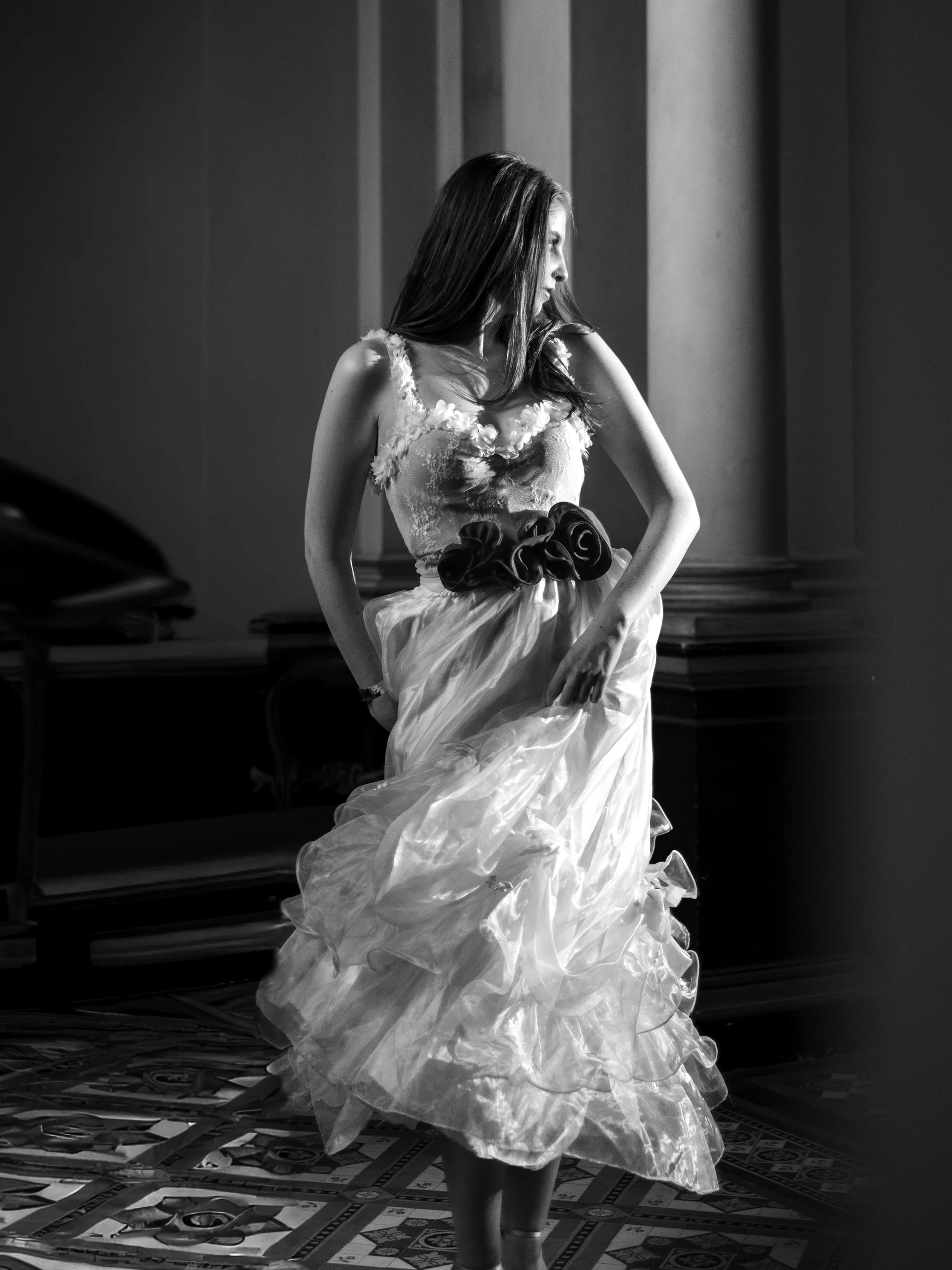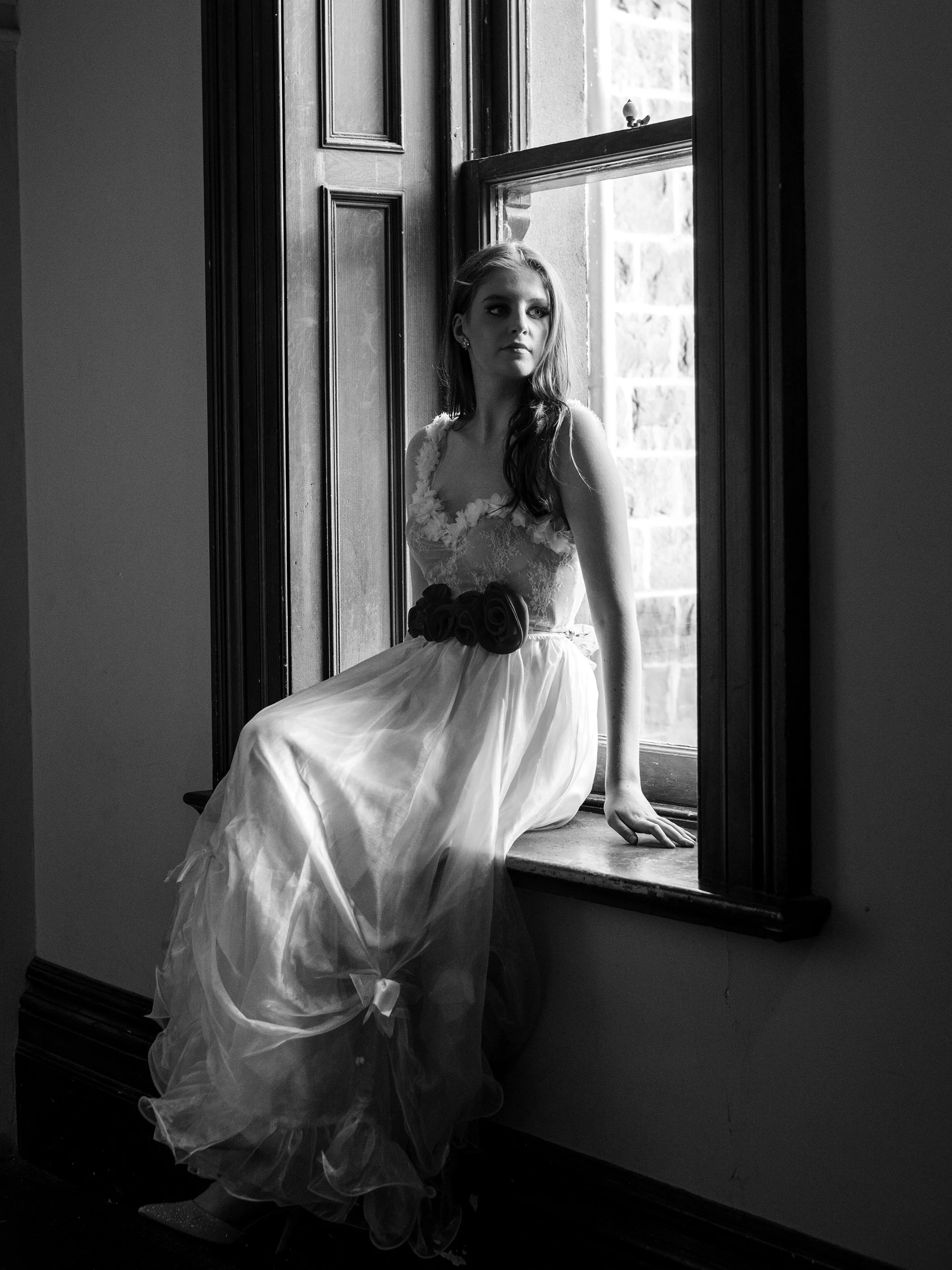
The frosted steel-frame glass at the top of the stairs, at the Werribee Park Mansion, is like one big soft box, perfect for an assortment of photographic creations.
Once upon a time, a long time ago, I was the tourism officer for Werribee Park Mansion – by default, at least. I managed publications at Wyndham City Council, which at the time was responsible for all Werribee tourism, the mansion included. Given that I’m also a photographer, I'm often asked whether the mansion is a good place for a photoshoot, and in particular for portraits. Here's my view.
The short answer is yes, it is. The longer answer is yes, but plan ahead.
First, a story. As glorious as the mansion is today, restored, it would surprise many to know that in the 1970s it lay unused – closed to the public, unrestored, its future unclear. It was a grey period in the Mansion’s history. The old Board of Works, which later became Melbourne Water, had a hand in managing the place, and some of its workers had keys; whether the state government had yet formally bought it by this stage I’m not sure. But a family friend worked for the Board of Works at the time, and he was one of the people who had a key. Late on hot summer evenings then he would open the doors of the deserted Mansion, lay out a picnic dinner for himself and, he told me, his lover, and eat with the whole mansion to himself, as if he were the lord of it. He used that word when he told me – lord – and he looked genuinely proud as he said it.
Nobody gets the place to themselves now. That's the first thing to understand about shooting here.
What makes it work for portraits
Werribee Park Mansion was built between 1874 and 1877 for the Scottish pastoralist brothers Thomas and Andrew Chirnside, who made their fortune in wool. It has 60 rooms, a central tower, and an arcade running around three sides of the main block. It's the only major freestone house in Victoria, and much of the interior is original or faithfully restored. Film and television crews know it well – it has served as a backdrop for Miss Fisher, Winchester and Neighbours.
For a portrait photographer this means that period texture is everywhere that you point the camera: tiled floors, carved stone, columns, dark timber, tall windows. The difficulty isn't finding a backdrop. It's getting a clean frame without a tour group in it.
Where to shoot, and what you'll get
The Entry Hall
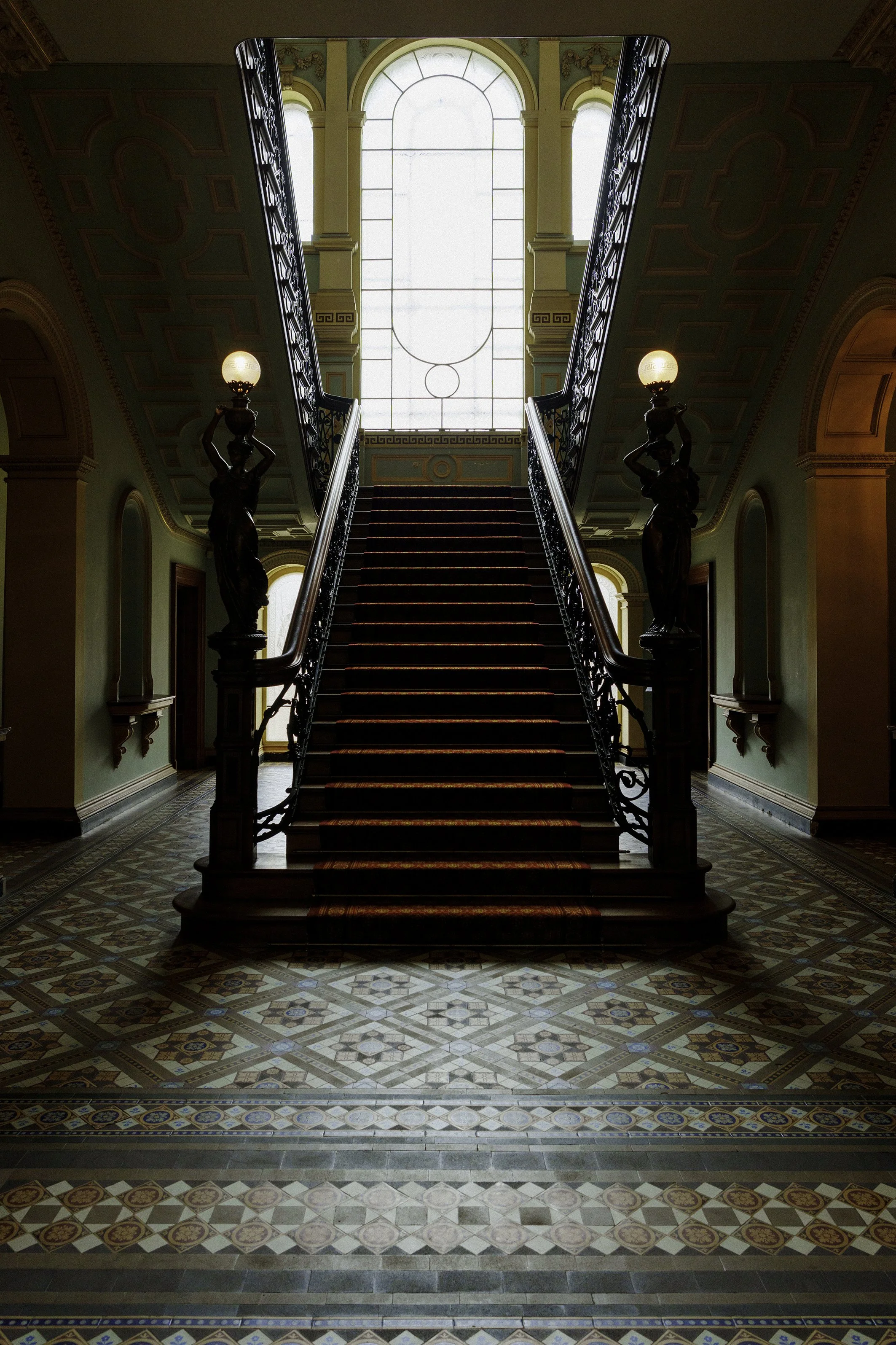
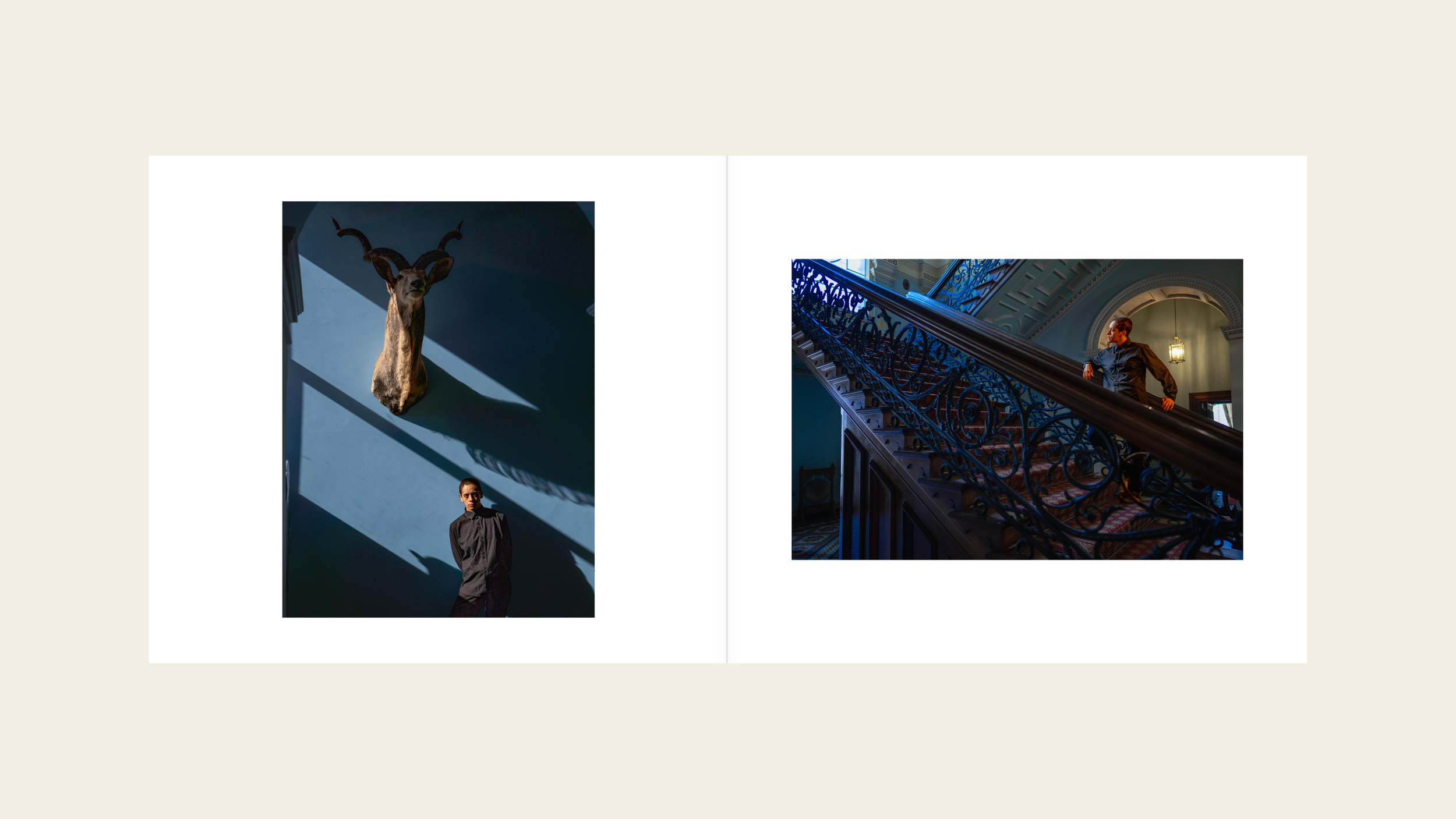
The entry hall is the showpiece: it features a Minton encaustic tiled floor, niches, Corinthian pilasters and free-standing columns, all of which leads to a grand staircase (below). The floor alone is worth shooting from a low angle, for sure, but the staircase itself is classic – and is catnip for photographers.
The Grand Staircase
The staircase is the shot everyone wants, which is exactly why it's the hardest to get. It's a thoroughfare. You'll be working in the gaps between visitors, if you’re visiting during peak times. The above (and further down below, in the “cinematic” shoot) is the main shot, though shooting top-down (below) is an awesome angle too.
A Parks Victoria staffer on the grand staircase in the entrance foyer of the Werribee Park Mansion. The staircase is excellent for top-down shooting. PHOTO: Campbell Mattinson.
The Balcony
I’m shooting wide-open here, into the sun, and so I’m not really showing it. But the upstairs balcony is an excellent place for photographs: there’s stone railing, a wide wrap-around terrace, and plenty of room to shoot, pose and manoeuvre.
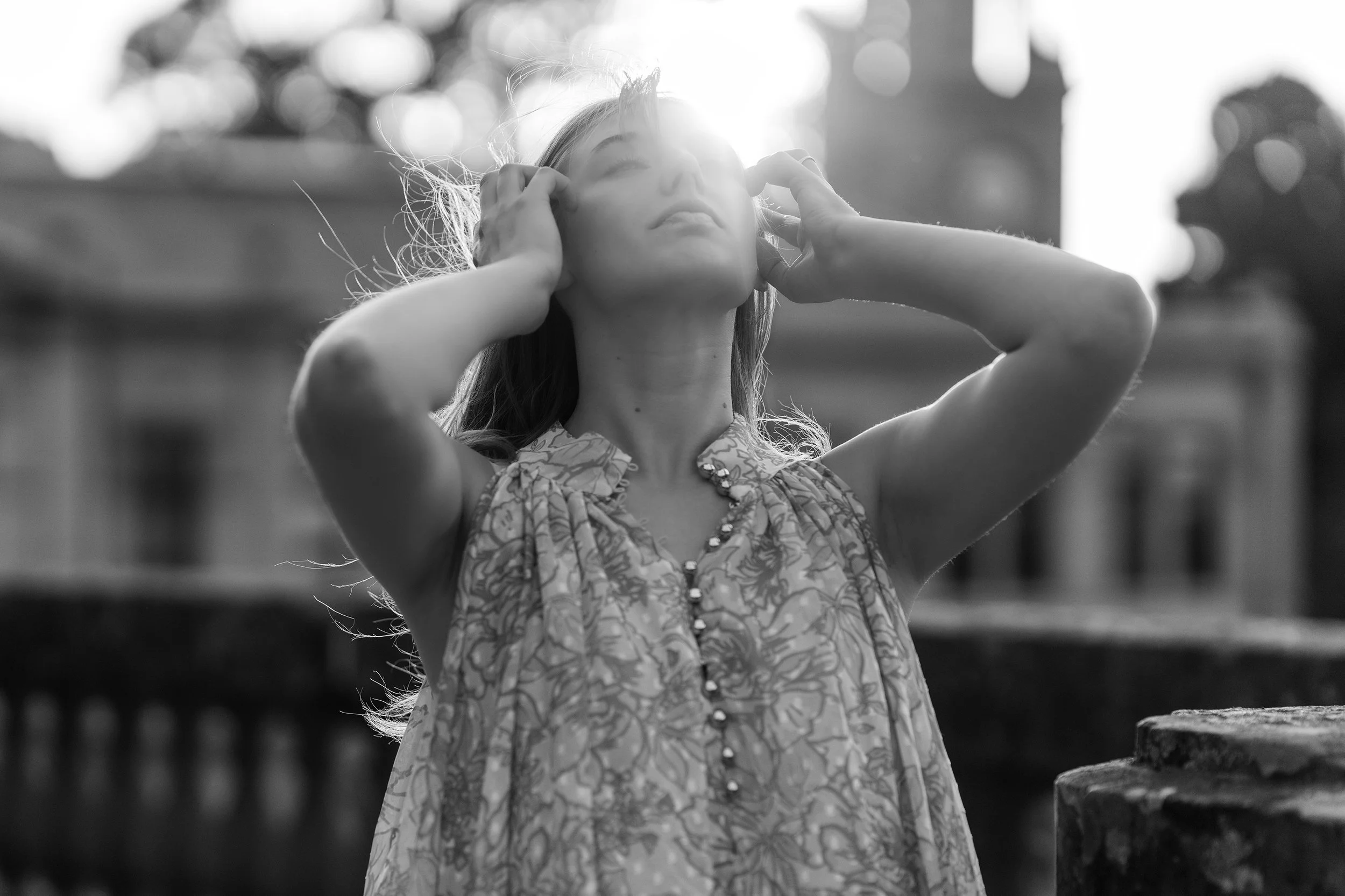
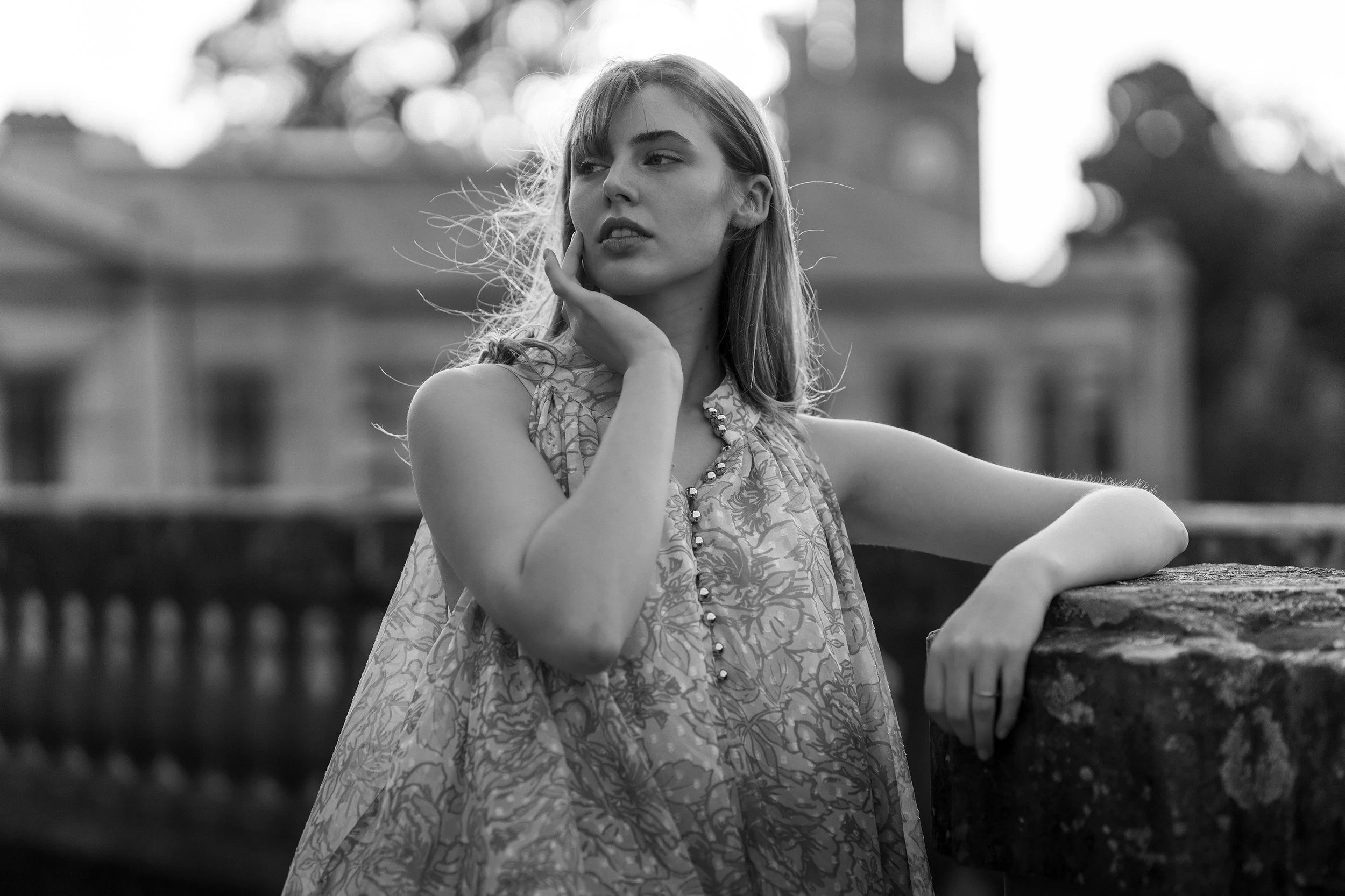
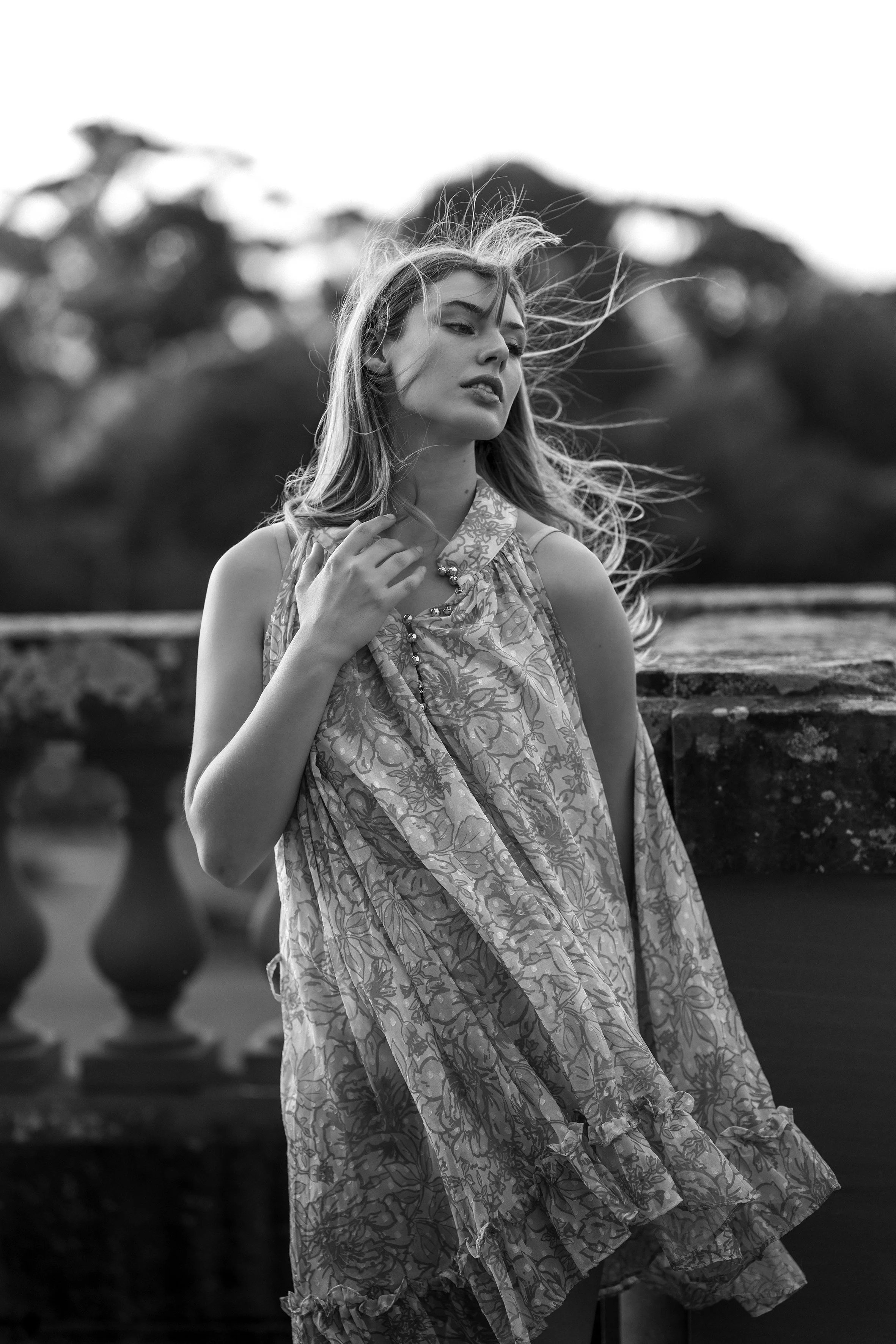
Dede Harrington, back lit, on the upstairs balcony at the Werribee Mansion. The balcony, particularly later in the day, is an excellent place to photograph: the walls are clean, the architecture is stately. PHOTO: Campbell Mattinson.
The “Kitchen”
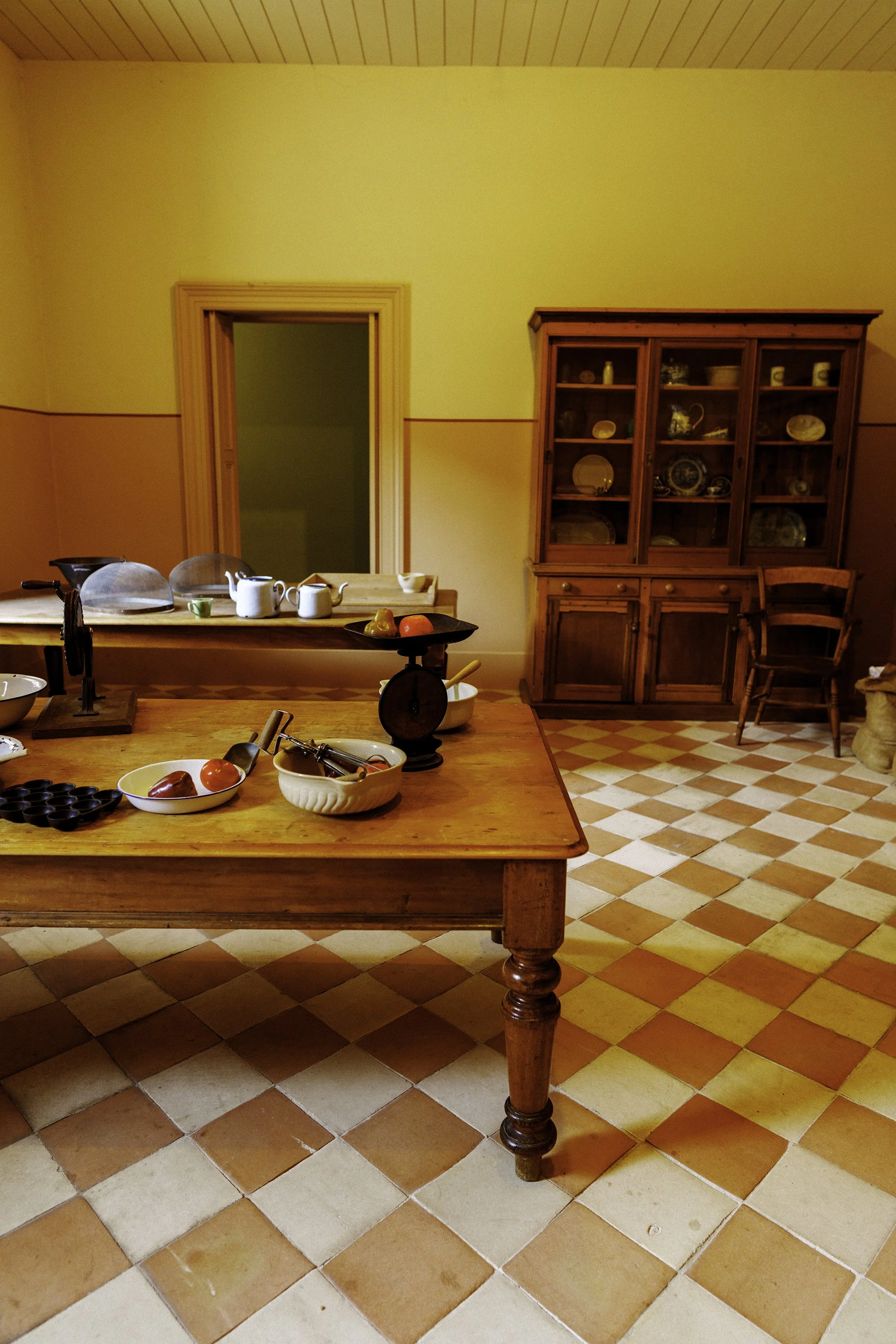
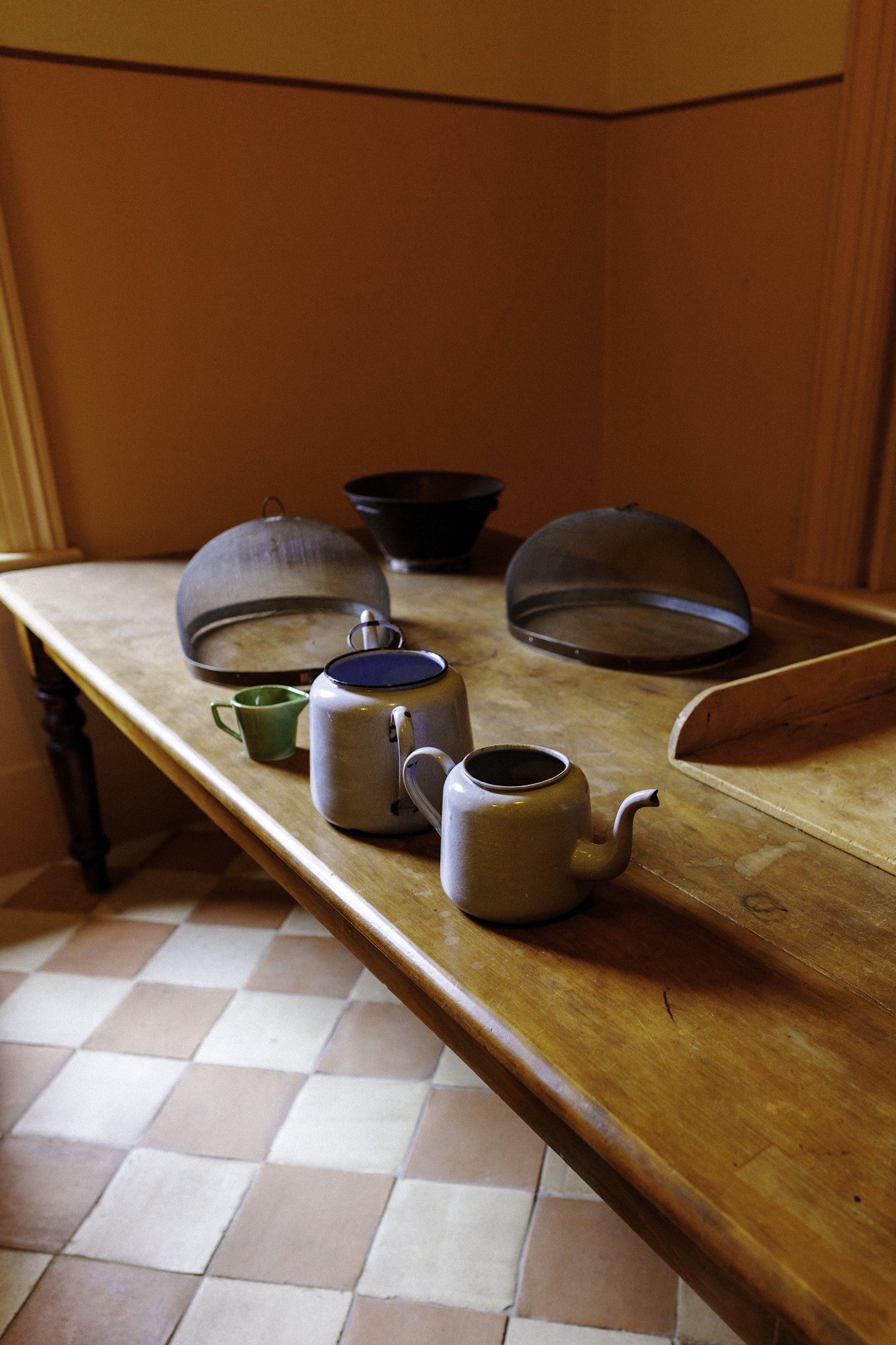
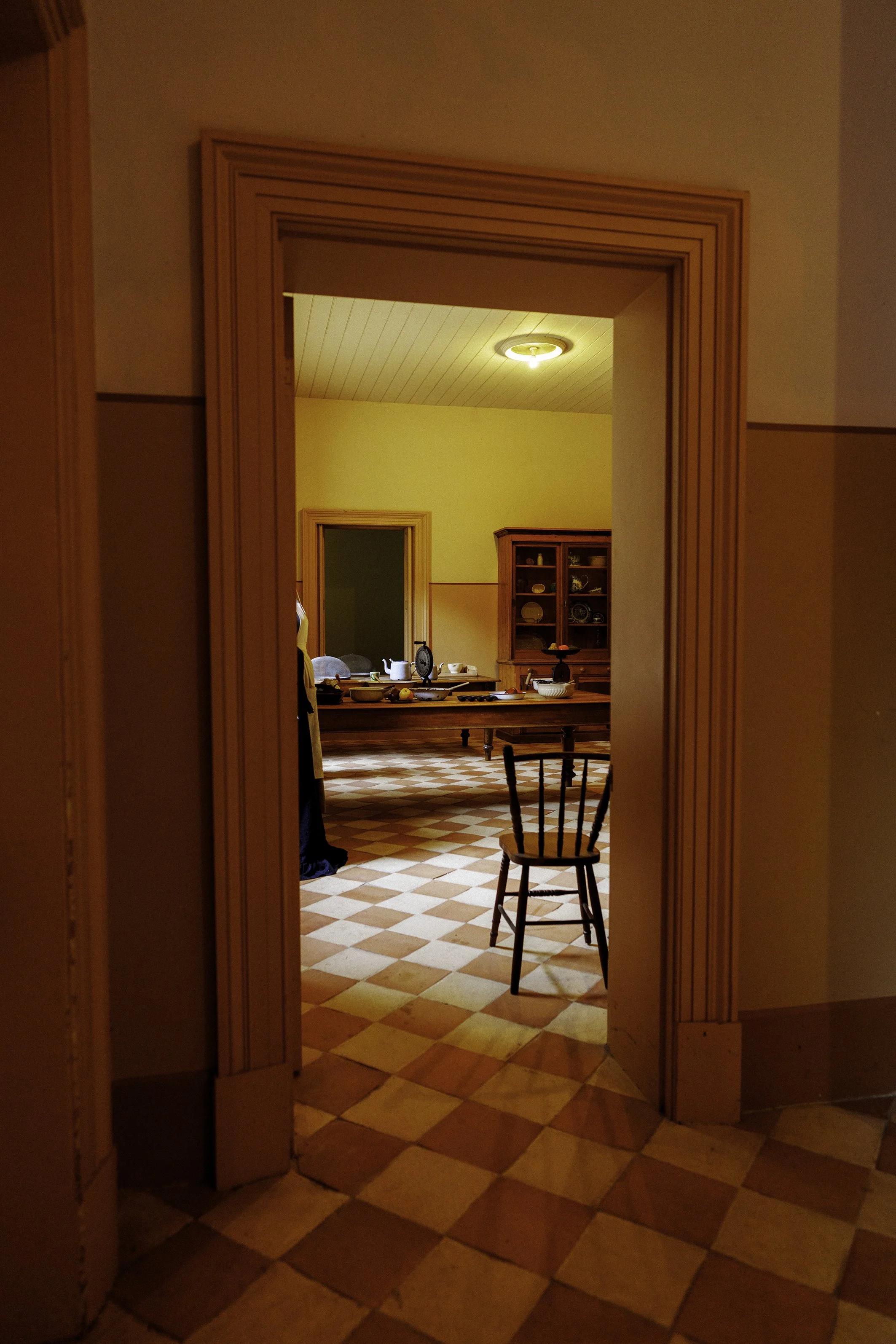
The kitchen has a lot of potential for photography. I’ve shot straight images of it – below – and I’ve also photographed people in it, the latter not necessarily successfully (courtesy of harsh afternoon light). But the kitchen has its own distinct vibe, and should be factored into your photographic considerations.
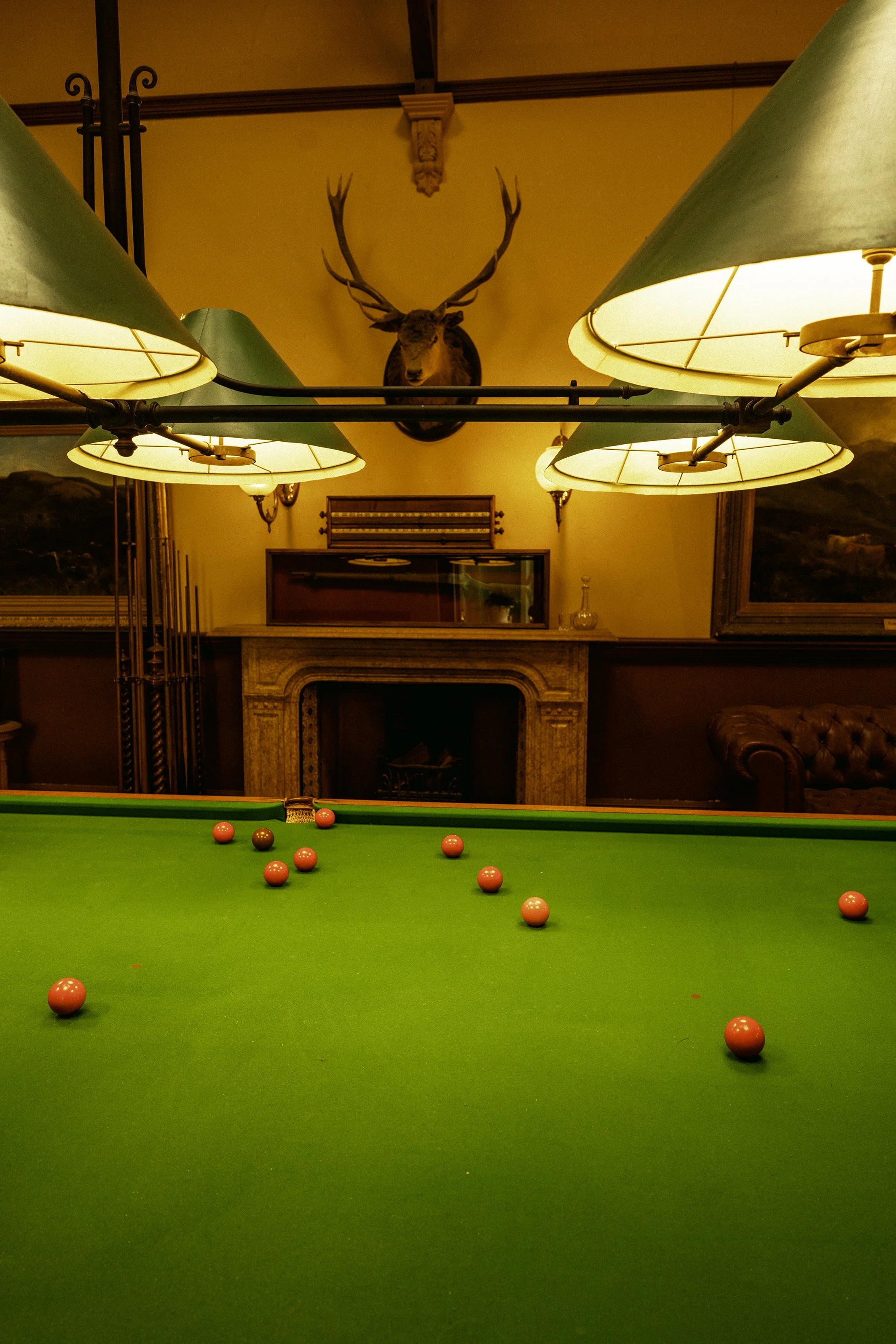
The Snooker Room
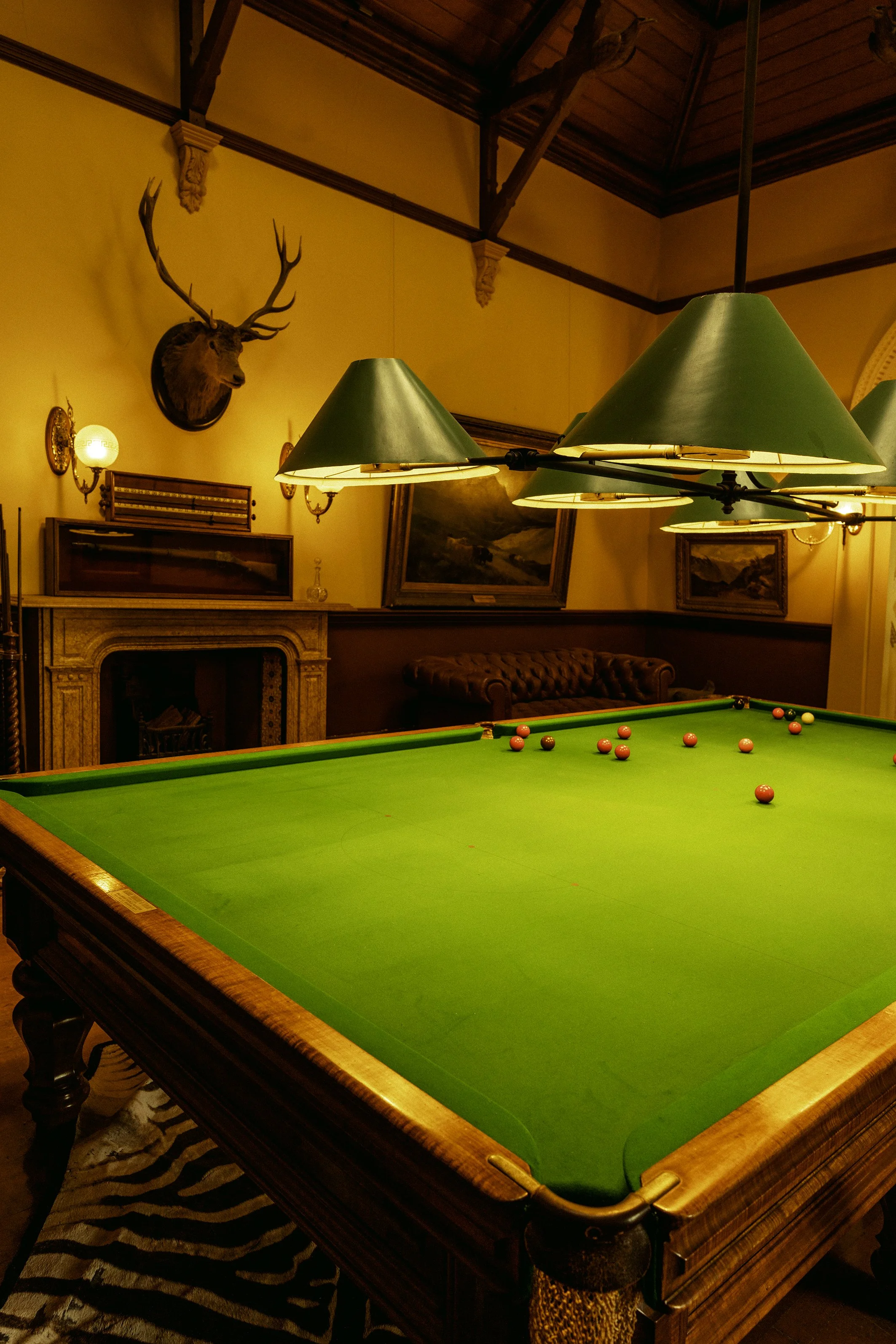
This is a classic room. In fact it may even be the Werribee Park Mansion’s most memorable room. A fair portion of it is roped off, so don’t expect open photographic access. And the light in this room is tricker than it is in other section of the estate. But look below; the potential is clear.
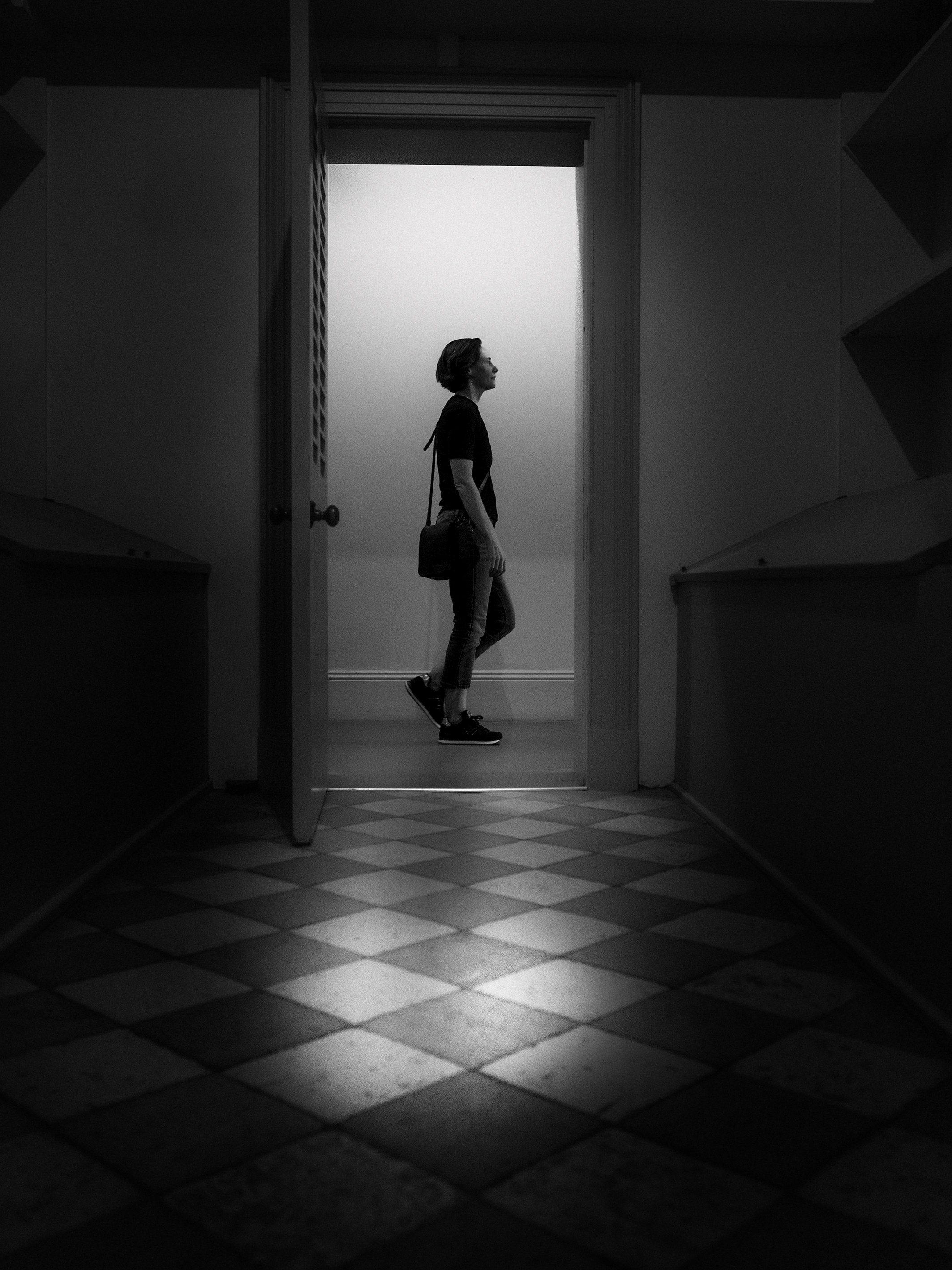
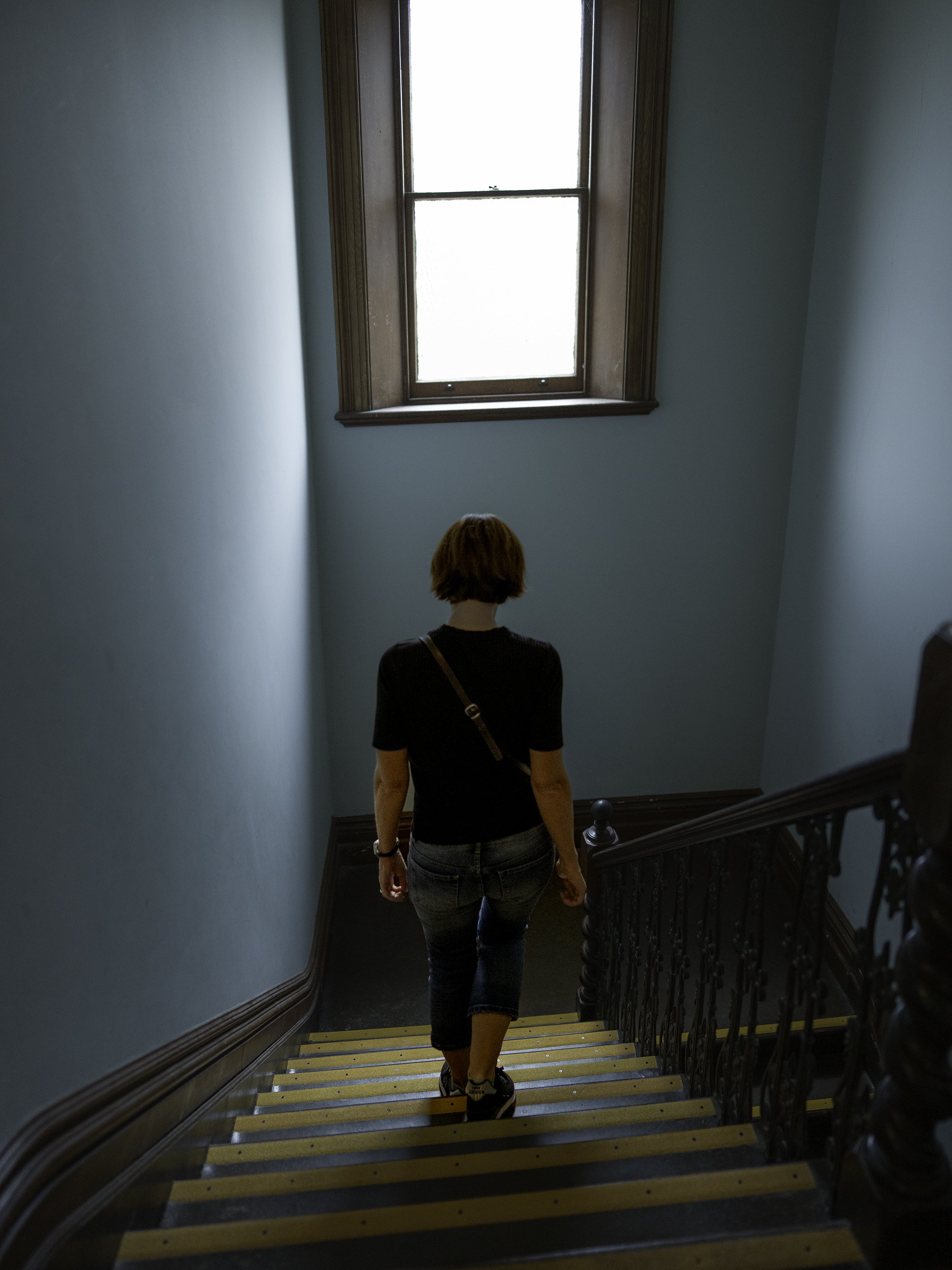
Street Photography
It’s not technically ‘street’ photography but candid photography, inside the mansion itself, can turn out well. You’d want to exercise a high level of respect, courtesy and discretion if you were to go down this path – or, as I did, use a family member – but the moodiness of the rooms and corridors lends itself to a street photography vibe.
The “bathroom”
I’m being cheeky here and really, just trying to show what the Mansion has to offer. The bathroom (below) is roped off,. so you can’t take photos in there.
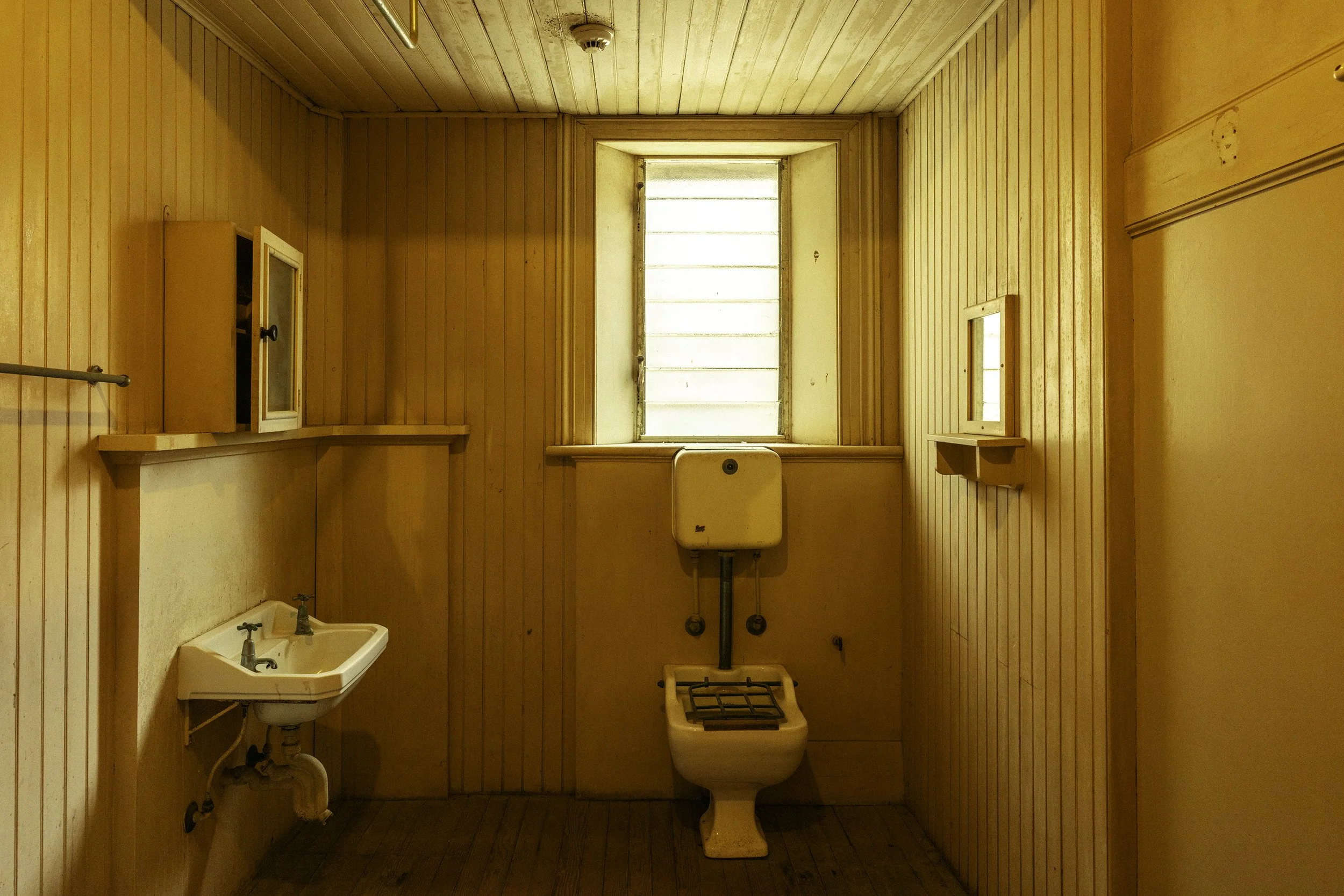
The “bathroom”
I’m being cheeky here and really, just trying to show what the Mansion has to offer. The bathroom (below) is roped off,. so you can’t take photos in there.
The Hallways
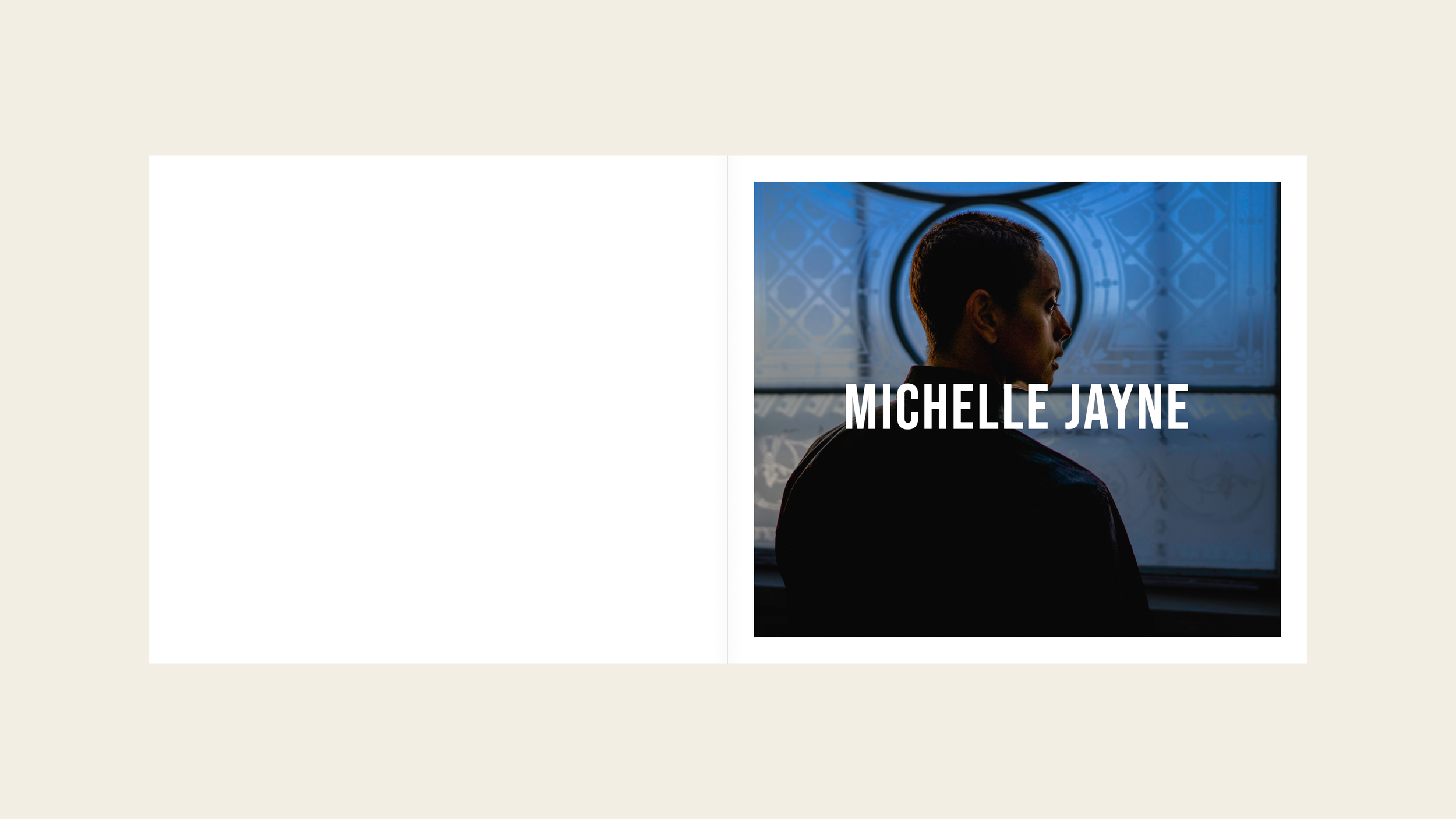
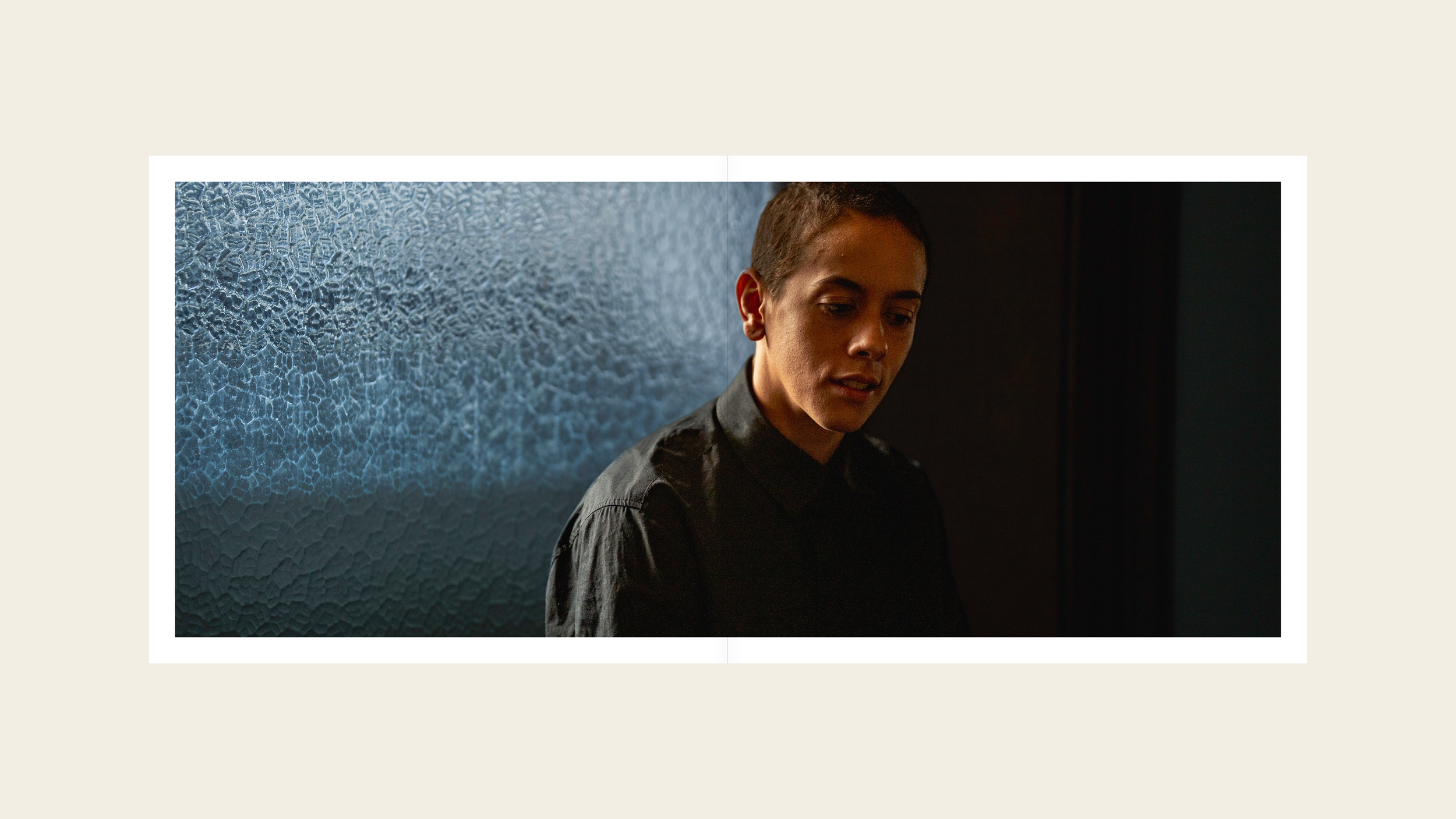
One of my favourite ever shots taken at the Werribee Park Mansion was in one of the long hallways in the western side of the Mansion. It’s the image of Michelle Jayne below. The moody, reflective image further down (also of Michelle Jayne) with frosted glass behind her was also taken in this hallway. Consider.
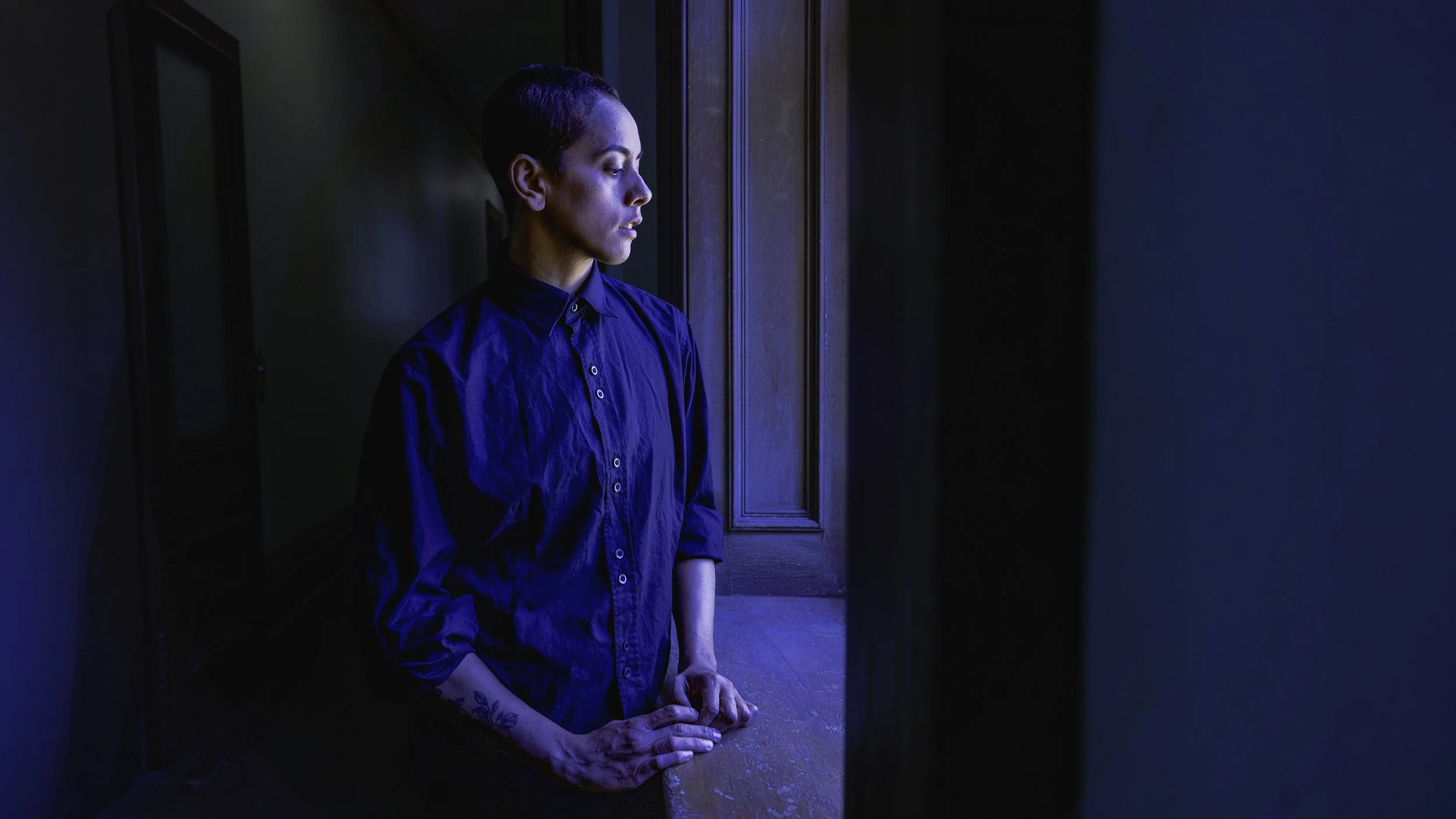
In 2023 I took a series of images of Michelle Jayne at the Werribee Park Mansion with a cinematic theme. The mansion’s moody-but-natural lighting is well-suited to cinematic stills and video. PHOTO: Campbell Mattinson.
Big Windows
There’s a window behind and to the left of the main entrance staircase which – if you like images of people standing at windows – is a classic for this sort of portrait. See the shot of Michelle Jayne immediately below and also the shot of Meika Bloomfield at the very bottom of this page. Both these images were take at the same ground-floor window.
The planning part
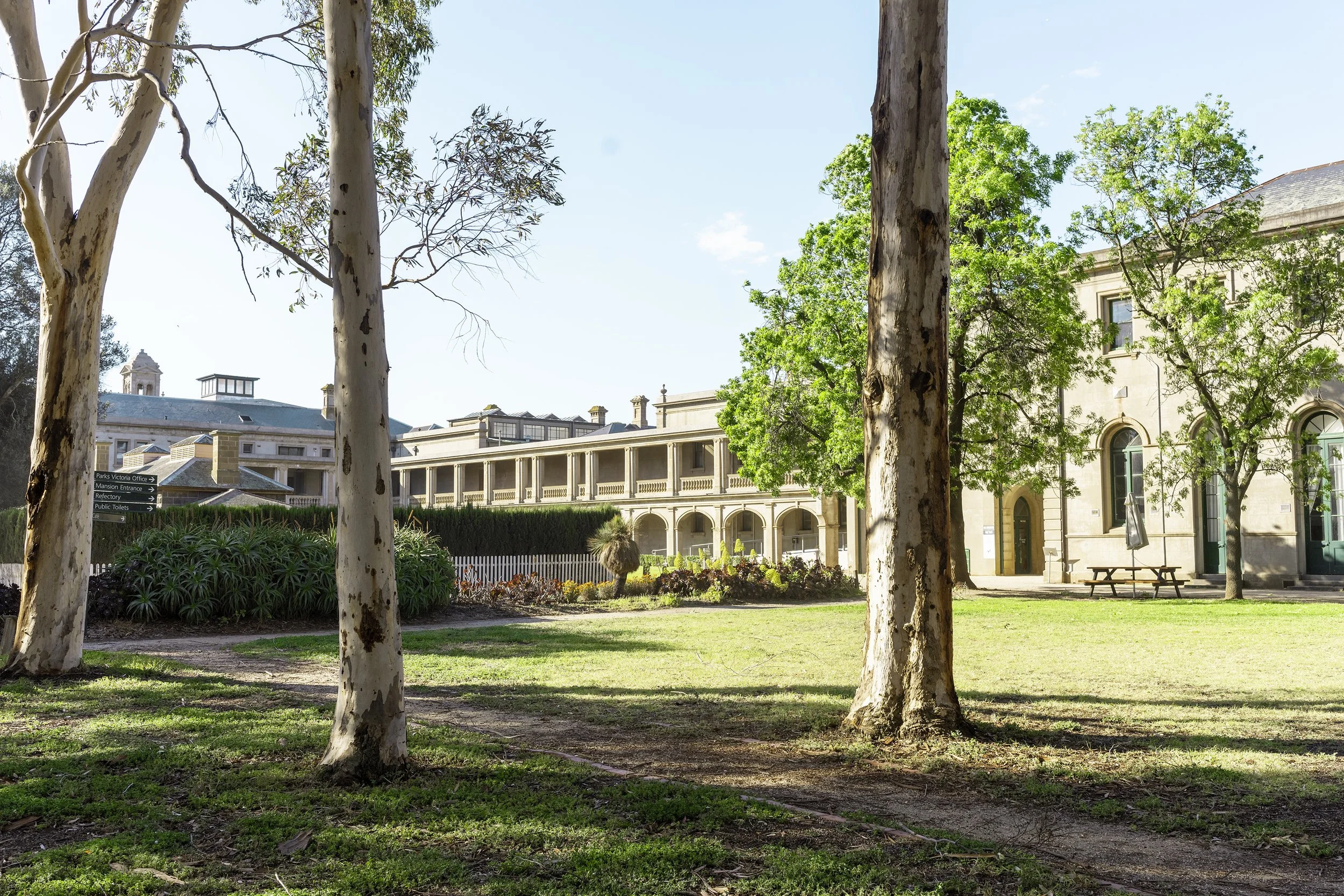
The mansion is open daily from 10am to 4pm, last entry 3.30pm. That rules out golden hour indoors; if you want evening light, it'll be in the gardens, and even then the car park gates close at 5.30pm on weekdays and 6.30pm on weekends and public holidays. (Caveat: it is sometimes possible to book specific golden hour shoots, particular outside of daylight savings time months. This would require pre-arrangement with Parks Victoria staff).
Everyone in your shoot needs a ticket. General admission is $12.60 for adults and $9.10 concession; the gardens and rose garden are free.
The mansion stays open to the public while you work (unless you’ve made a specific arrangement). You don't get exclusive use of any room, and you can't block paths, doorways or the staircase. Patience is part of the job here.
If you're shooting professionally – for a client, for sale, or for anything that might end up commercial – you need a filming and photography permit from Parks Victoria. That includes portrait photographers. The application requires a certificate of currency for at least $20 million public liability insurance noting Parks Victoria's interest, plus a site map. Allow at least 10 business days after all documents are in; applications that don't allow that lead time aren't accepted. Fees vary with the complexity of the shoot, and conditions – including what equipment you can bring inside – are written into the permit itself, so read it closely. Weddings go through a separate wedding permit.
You'll find other guides online quoting more specific rules: a seven-day lead time, a $150 late fee, set half-day and full-day commercial rates, and equipment limited to one camera and one tripod. These details don't match Parks Victoria's current published information and appear to be out of date, though they may reflect conditions that applied in the past. Either way, the direction of travel is clear. A photographer friend of mine shot at the park without a permit and was charged $275 on the spot – a figure that presumably included some kind of penalty. Rules change, fees change, and enforcement clearly happens. Get approval before you go, and you’ll have no concerns.
Hobby photographers with basic equipment, not making images commercially available, generally don't need a permit. If there's any chance the images will be used commercially later, Parks Victoria's advice is to apply anyway.
One thing I would add about portrait photography at the Werribee Park Mansion: if you rock up with camera gear and a model who is clearly dressed (up) in period clothes or formal evening wear or the like, then you’re going to be asked whether or not you have a permit, or refused, and maybe even charged a penalty fee. If you rock up with camera gear and people who’re not so specifically dressed, then you’re likely to be free to take photographs. Or that’s my experience. The images on this page of Michelle Jayne were not, for instance, taken with a permit. All the other images of models here though, did have a permit in place.
I shot a cinematic series with model Michelle Jayne at the Werribee Park Mansion on a Sony a7R IV (this image, and above). These images of Michelle Jayne were taken without a permit. All the images and video below (other than the exterior garden shot) were taken with a photography permit in place.
Talking of cinema: this video of model Dede Harrington, shot in the late afternoon sun on the Werribee Mansion balcony, shows that the exterior of the mansion has good cinematic potential. Shooting at the Werribee Park Mansion is always a two-part question: is it good inside, and is it good outside?
Frequently asked questions
Do I need a permit to take portraits at Werribee Park Mansion?
If you're a professional or the photos will be used commercially, yes – Parks Victoria's filming and photography permit explicitly covers portrait photographers. Amateur photographers taking personal photos with basic equipment generally don't need one.
What happens if I shoot without a permit?
You risk being charged on the spot. One photographer I know was charged $275 after shooting without a permit. Given that the rules and fees change, pre-approval is the safer course.
How far ahead should I apply?
At least 10 business days once all your documents are submitted, or 20 business days if a drone is involved. Late applications aren't accepted.
How much does a permit cost?
It depends on the shoot. Parks Victoria sets fees by complexity and publishes them in its fees and charges schedule; you can also ask for a quote in the comments section of the application form.
Model Nicola Paige in the upstairs foyer section of the Werribee Park Mansion. Natural light still beams into this “middle” section of the upstairs Werribee Park Mansion concourse.
Can I fly a drone at Werribee Park?
Only with a permit and a licensed, CASA-certified operator. Recreational drones aren't permitted on Parks Victoria land at all.
What are the mansion's opening hours?
10am to 4pm every day, including public holidays, with last entry at 3.30pm.
Can I get sunset portraits at the mansion?
Not inside – it closes at 4pm. The gardens are an option in late light, but watch the car park closing times.
Can I get the grand staircase to myself?
Not during opening hours. It's a public thoroughfare, so plan to shoot between visitors.
Can I bring a pram or a dog?
No prams inside the mansion, and no dogs anywhere in Werribee Park other than assistance dogs.
Was Miss Fisher filmed at Werribee Park Mansion?
Yes. The mansion has also appeared in Winchester and Neighbours – among many other shows. It’s been used extensively in Australian comedy sketches over the years.
Actress Meika Bloomfield in a white dress, with red bow, at the back of the entrance foyer of the Werribee Park Mansion. There’s lovely (natural) light at the back of the entrance foyer, and floral props.